The "dominions"
The "dominions"
Table of contents
Eine Karte von 1741 erzählt
Die „Domänen“ im Umfeld der Burg
Aus dem Jahr 1741 datiert eine Karte, die die Burg Ravensberg zeigt und die zugehörigen Ländereien im Umfeld der Festung dokumentiert. Zu Burgen gehörten stets umfangreiche Liegenschaften. Diese im landesherrlichen Besitz stehenden Grundstücke und Nutzungsrechte werden als „Domänen“ bezeichnet. Sie dienten in früheren Zeiten dazu, die Bewohnerinnen und Bewohner der Burg zu versorgen. Später, als die Festung als Herrschafts- und Verwaltungssitz ihre Bedeutung verlor, verpachteten die Landesherren die Domänen und erzielten dadurch lukrative Einkünfte. Neben Äckern, auf denen Getreide wuchs, handelte es sich um Viehweiden und Wiesen sowie Teiche. Hinzu kamen Gehölze und Flächen, auf denen Torf abgebaut wurde. Der Name einiger Flurstücke lässt auf die frühere Nutzungsform oder deren Beschaffenheit schließen: Auf dem „Kuhkamp“ weideten einst Rinder, im „Kreps Teich“ waren Krebse beheimatet und der „Sandt Brinck“ deutet auf einen sandigen Untergrund hin. Das „lange Rott“ nördlich der Burg belegt eine Rodungstätigkeit, um vormals wüste Flächen urbar und landwirtschaftlich nutzbar zu machen.
Der „Kuhof“ – Sitz des Amtmanns und Wirtschaftshof unterhalb der Burg
Im 18. Jahrhundert hatte der Amtmann zu Ravensberg diese Grundstücke gepachtet. Seine Verwaltungsgeschäfte führte er vom „Kuhof“ aus, dem zur Burg gehörigen Wirtschaftshof oder sogenannten Vorwerk. Dort hielt er auch Vieh, unter anderem eine Schafherde nannte er sein Eigen. Außerdem zählten Mahlanlagen zu den Domänen. Ein Backhaus komplettierte den Gebäudebestand des Kuhofs. Des Weiteren baute der Amtmann Hopfen zum Bierbrauen an. In der ersten Hälfte des 19. Jahrhunderts wurde der Kuhof abgebrochen.
The "dominions"
Die Vorburg
Verteidigung und Wirtschaft
Historischer Vergleich
Die Burg Ravensberg 1836 mit Kuhhof und die Burg heute.Grethe Leefferman
Eine Eigenbehörige aus Berghausen erzählt...
Im 16. Jahrhundert besaß der ravensbergische Landesherr zahlreiche sogenannte Eigenbehörige im Umfeld der Burg Ravensberg. Eine von ihnen, Grethe Leefferman aus Borgholzhausen-Berghausen, berichtet aus ihrem mitunter entbehrungsreichen Leben und darüber, was es bedeutet, eine Eigenbehörige zu sein. Gesprochen von Miriam Schweika.
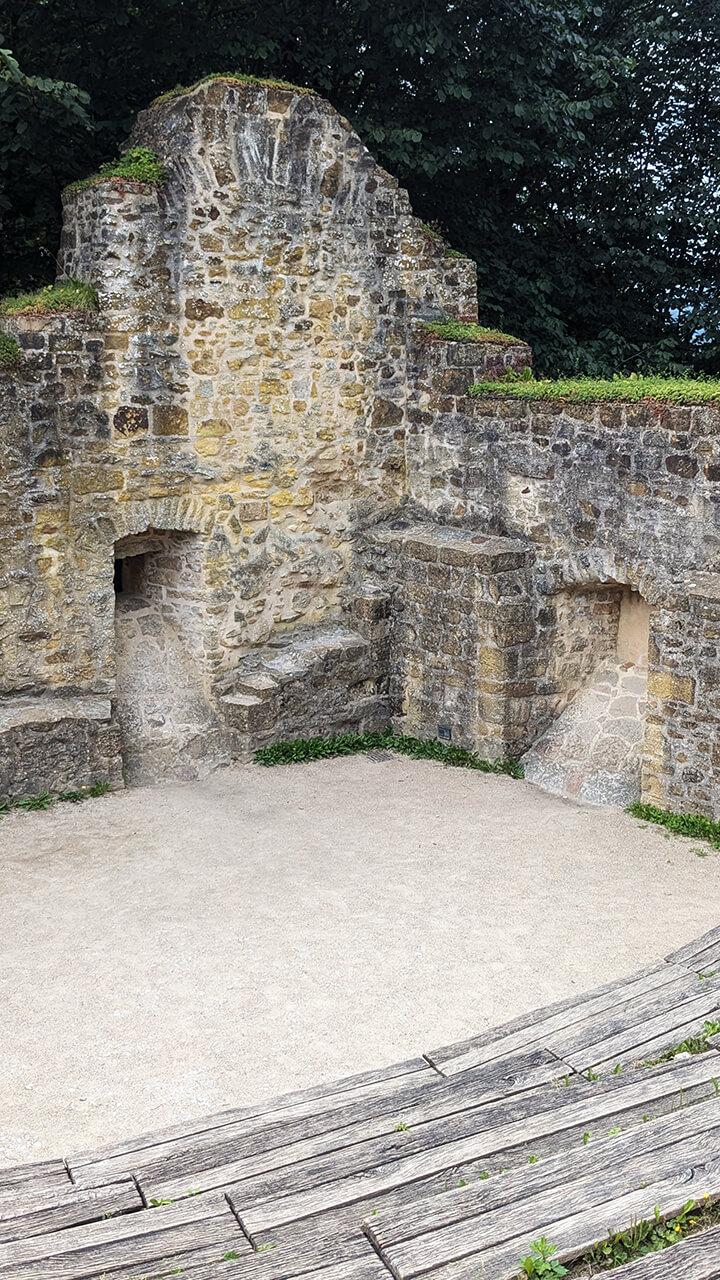
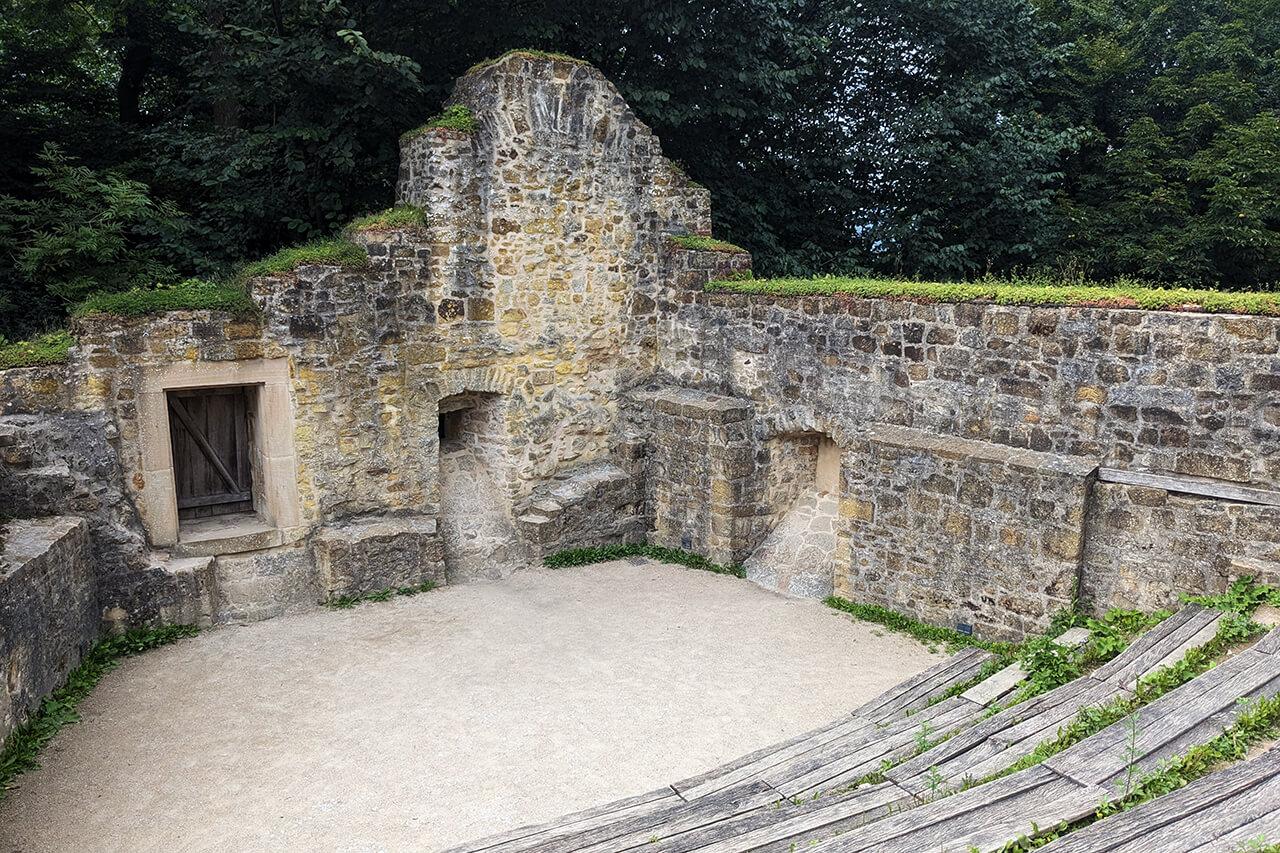
Hier sehen sie ein 360° Panorama des Theaters im Jahre 2024.