
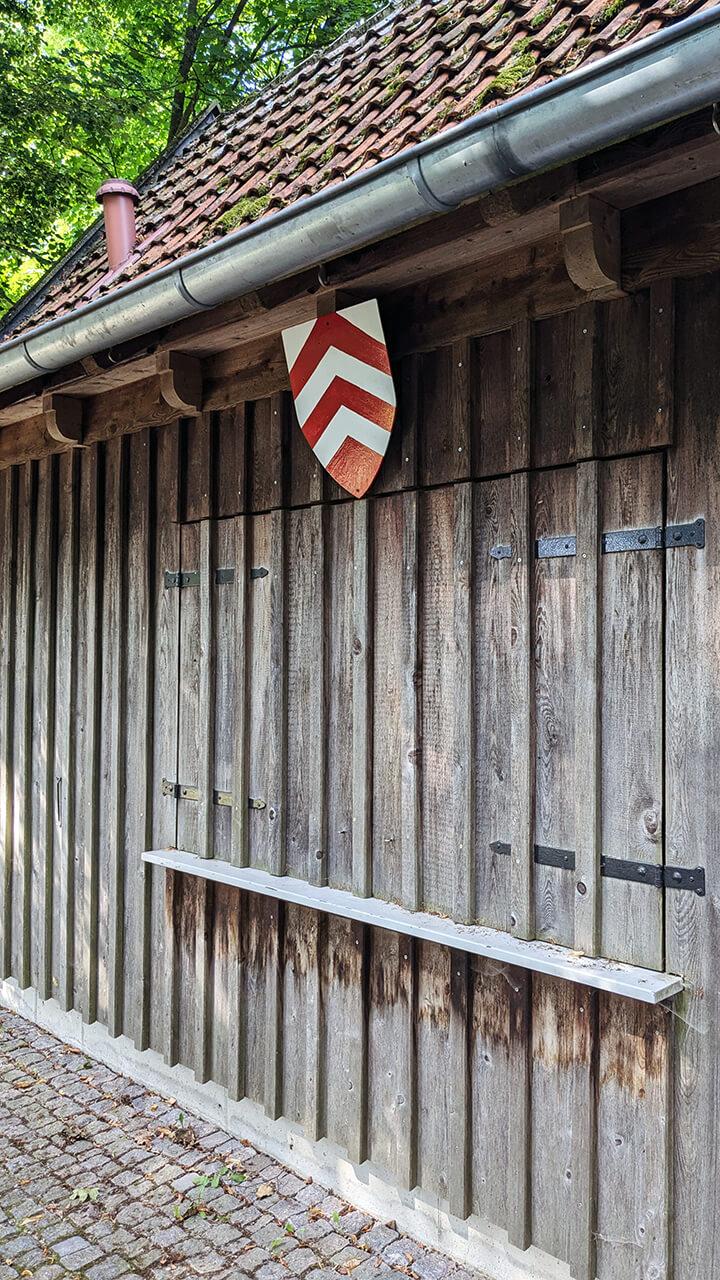
The "Sparren" coat of arms
The "Sparren" coat of arms
Table of contents
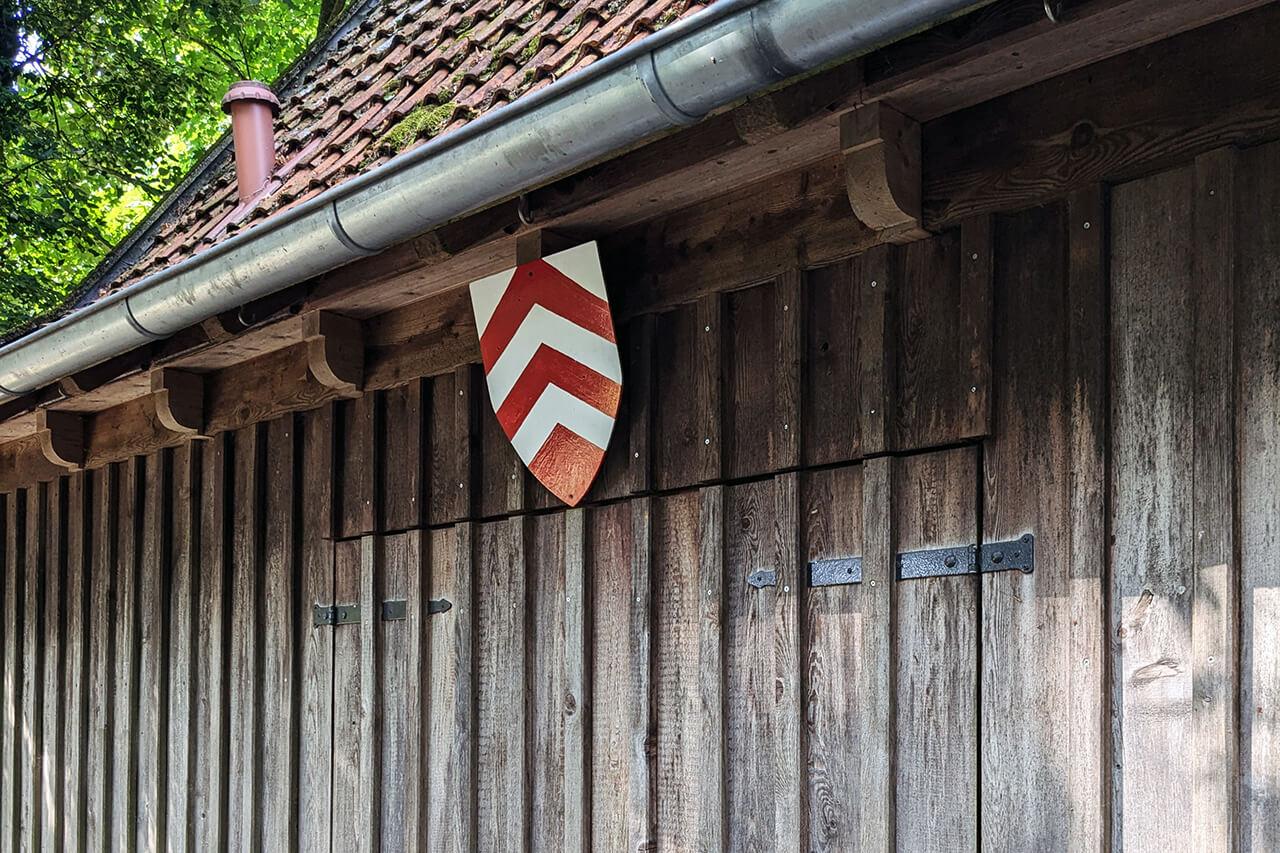
The "Sparren" coat of arms
Erkennungsmerkmal der Grafschaft Ravensberg
Im Mittelalter sahen Ritter in ihrer Rüstung ziemlich ähnlich aus. Auf dem Schlachtfeld war es mitunter schwierig, Freund und Feind auseinanderzuhalten. Deshalb entstanden Wappen als Erkennungsmerkmale, die eindeutig einer adligen Familie zugeordnet werden konnten. Diese Zeichen fanden sich später unter anderem auf Siegeln, Münzen oder Grabmalen. Die Wappenkunde oder Heraldik beschäftigt sich mit der Beschreibung und Deutung von Wappen. Die Fachleute beschreiben das erstmals an der Wende vom 12. zum 13. Jahrhundert zu beobachtende Wappen der Grafen von Ravensberg folgendermaßen: Es handelt sich um „ein sechsfach sparrenweise geteiltes Schild. Die Tinkturen sind silber und rot.“
Die „Karriere“ des ravensbergischen Sparrenwappens
Im Jahr 1346 starben die Grafen von Ravensberg im Mannesstamm aus. Die am Rhein ansässigen Herzöge von Jülich-Berg erbten das Territorium und führten fortan zugleich den Titel „Grafen zu Ravensberg“. Und außerdem übernahmen die neuen Herrscher auch das Sparrenwappen. Somit dokumentierten die Herzöge die neuen Eigentums- und Herrschaftsverhältnisse und kreierten ein vielteilig zusammengesetztes Wappen, das als „Allianzwappen“ bezeichnet wird. Bei Heiraten wurden die Wappen der Eheleute ebenfalls zusammengeschlossen; auf diese Weise verbreitete sich das ravensbergische Sparrenwappen in ganz Europa, vor allem im deutschsprachigen Raum. So lassen sich die Sparren beispielsweise in den Wappen des Kurfürstentums Bayern, des Kurfürstentums Sachsen oder des preußischen Königreichs entdecken.
Was verbirgt sich hinter den drei Sparren?
Doch weshalb wählten die Grafen von Ravensberg ausgerechnet drei Sparren für ihr Wappen? Der Landeshistoriker und Sprachwissenschaftler Christof Spannhoff vermutet, dass es sich um eine falsche Ableitung des Namens „Ravensberg“ handeln könnte. Denn im Althochdeutschen bezeichnet „ravo“ den Stab, einen kleinen Balken oder eben auch einen Sparren. Die Zeitgenossen deuteten den namensgebenden Ravensberg also womöglich als „Berg mit Sparren“; heute wissen wir: Eigentlich geht diese Bezeichnung zurück auf den männlichen Rufnamen Hravan. Der Ravensberg ist folglich in Wirklichkeit der „Berg des Hravan“.
The "Sparren" coat of arms
Der Brunnen
Ohne Wasser keine Burg
Fahrt in den Brunnen
Film: Stiftung Burg Ravensberg